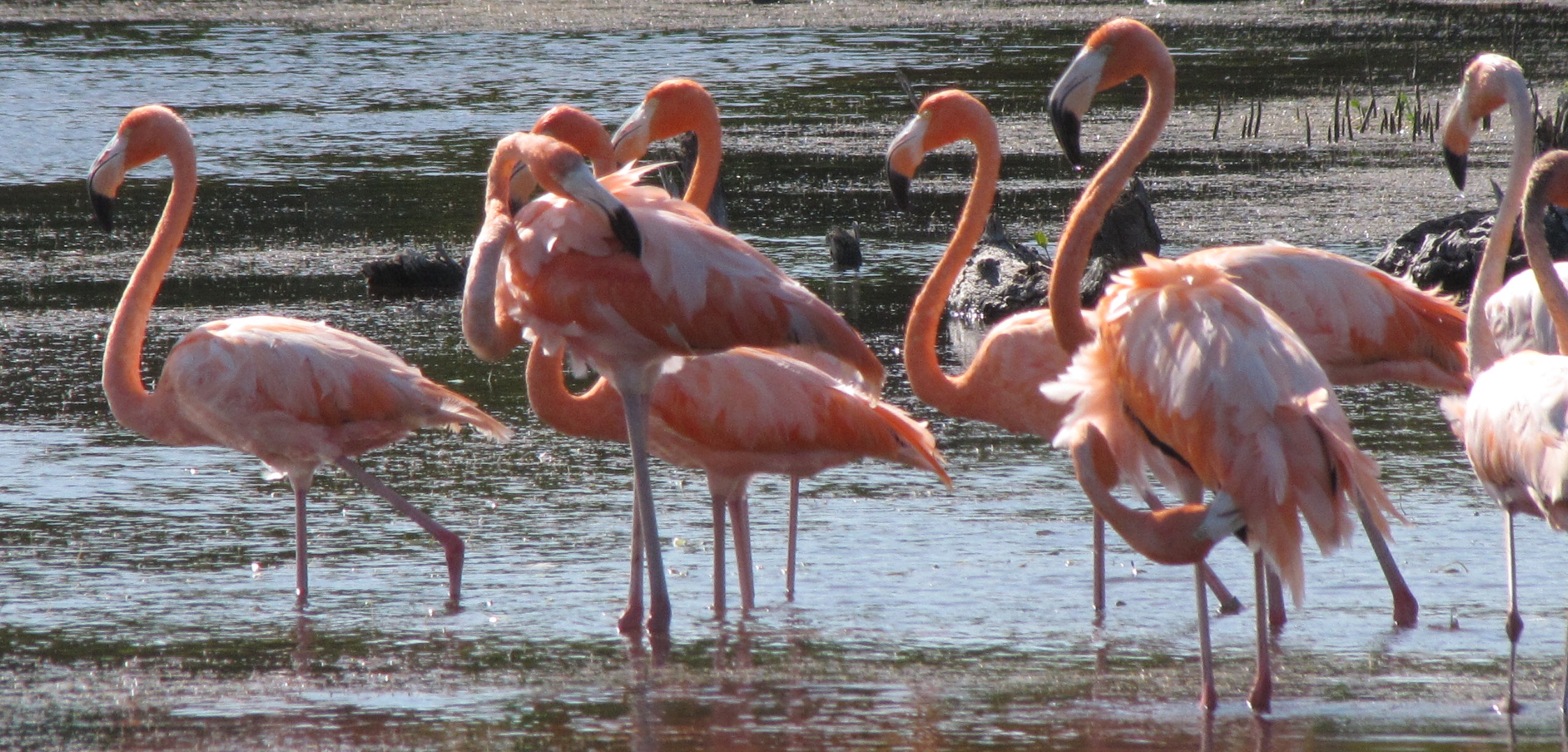

Foto by Teledragon, on Photobucket
An article from Britain describes fertility research which has succeeded in developing sperm cells from female tissue.

Foto by Teledragon, on Photobucket
An article from Britain describes fertility research which has succeeded in developing sperm cells from female tissue.

Mary and I had opportunity to watch a new building arise in the backyard nextdoor to our rental house over the winter. It was almost entirely done by hand. The albañiles (masons) mixed the concrete for floor and mortar by hand, on the ground, with a shovel, and passed it up by bucket. (They brought in a gasoline powered mixer for the second floor and roof, perhaps due to heat making for short set times.) ¶At first we felt invaded, but quickly became entertained by listening to the camaraderie of the laborers – their whistling, singing, joking, and joy. While the video linked here is not from Yucatan, it captures some of the delight to be seen in such pursuits. It also speaks of human ingenuity in the absence of capital and power equipment.

I’ve only been to the zoo at Centenario park once, and have very few photos from the visit. I don’t recall whether there are any giraffes in the collection. But I recently received a wonderful video ballet of giraffes from a friend, which deserves to be shared. I could say I saw it one day at Centenario park, but nobody would believe me, even if the park were on calle Mulberry. But I promise that you won’t be disappointed if you CLICK HERE.
(Thanks, Pat!)

Teasing out the early histories of these two peoples is yielding new clues, according to this story from Nat’l Geographic

My friend Paul (Hammockman) sent me a helpful article today on the topic of the human microbiome (gut flora) which reminded me of something I’ve shared with many friends, and endeavor to remember myself, which is the subject and title of this post. It’s about our vehicles, which is to say, our bodies. Few people mistake themselves for their rides; yet we often are tempted to believe that I am my body. ¶ Many of us have succumbed to this temptation so often that it is difficult to shake. How absurd! Even so, it has become something of an identity statement. Yet I AM is God’s name, according to CS Lewis, and we have stolen it for a joy ride; or perhaps it’s more of a terror trip at times. ¶ In the comment section I’ve put my response to Paul regarding the article linked above. The article, which is a bit long, is well worth reading.

The famous photographic book publisher, Aperature, has a new title which examines Mexican portraiture. Anyone who has ever had a bad hair day knows that this category calls for equal time. So here’s another:

With hundreds of portraits spanning a century and a half, the instinct would be to sort them chronologically.
But curator Pablo Monasterio ignored the dates and organized the book “Mexican Portraits” by recurring themes, such as lucha libre wrestling or occupational portraits.
The book, published by Aperture, features a selection of photos from Fundación Televisa.
“Instead of explaining what’s happened with portraiture, I looked for what photographers and artists were doing and how it relates to history,” Monasterio said.
For example, Jose Luis Cuevas’ images from the series “The Average Man” (Image 10) portray the typical working man of the 21st century in what he would wear to the office, a practice that had been common a century before (Image 2).
But this type of portrait dates to before photography: In the early 19th century, Europeans visiting Mexico would paint portraits of the residents in their work outfits to show the foreign country and people to other Europeans, Monasterio said.
Mexico’s traditions come through in the portraits, he said.
The photos shot by Romualdo Garcia (Image 1) from the early 20th century are a great example of the era of posed portraits taken in a studio. The subjects would come in and put on dresses and coats provided by the photographer in the studio.
Monasterio said Garcia was the best studio photographer in the ’20s.
“It’s absolutely wonderful how people trusted the photographer and to see the results he gave them,” Monasterio said.
The photographers can send messages through their works that might not be clear before the edited series is compiled.
Daniela Rossell took portraits of wealthy Mexicans in their homes for a series titled “Rich and Famous” in the late ’90s (Image 9). Individually, the images seemed flattering, but when the full series came out, it appeared critical of high-class people, Monasterio said.
“Many were offended and felt they were manipulated,” he said.
Years later, most of the subjects are happy they were a part of the series and are pictured in the book, Monasterio said.
In a chapter titled “Mask versus Mullet,” Monasterio pulled images that related to masked wrestling known as lucha libre. In these matches, the loser is humiliated by having to remove his mask and have his hair cut in front of the crowd. Monasterio placed a portrait of a hacked hairdo after a loss from 1939 (Image 3) with a series of portraits of hairstyles resembling a wrestler’s loss that were taken in the 1960s (Image 7).
Monasterio, who spent a little over two years putting the book together, scoffed at the question of how many images he looked at. He has been an editor for decades, and some photos and themes have been on his mind since the start of his editing career, so he didn’t have to revisit them.
“Portraiture is something that is everywhere,” he said. “It gets to a point where almost everything can be a portrait.”
Every image has a different voice depending on the experiences of the viewer, he said, but Monasterio likes to try to control the interpretation through editing.
“My obsession is trying to guide the reading,” he said.
– Lauren Russell, CNN
CLICK for additional images.


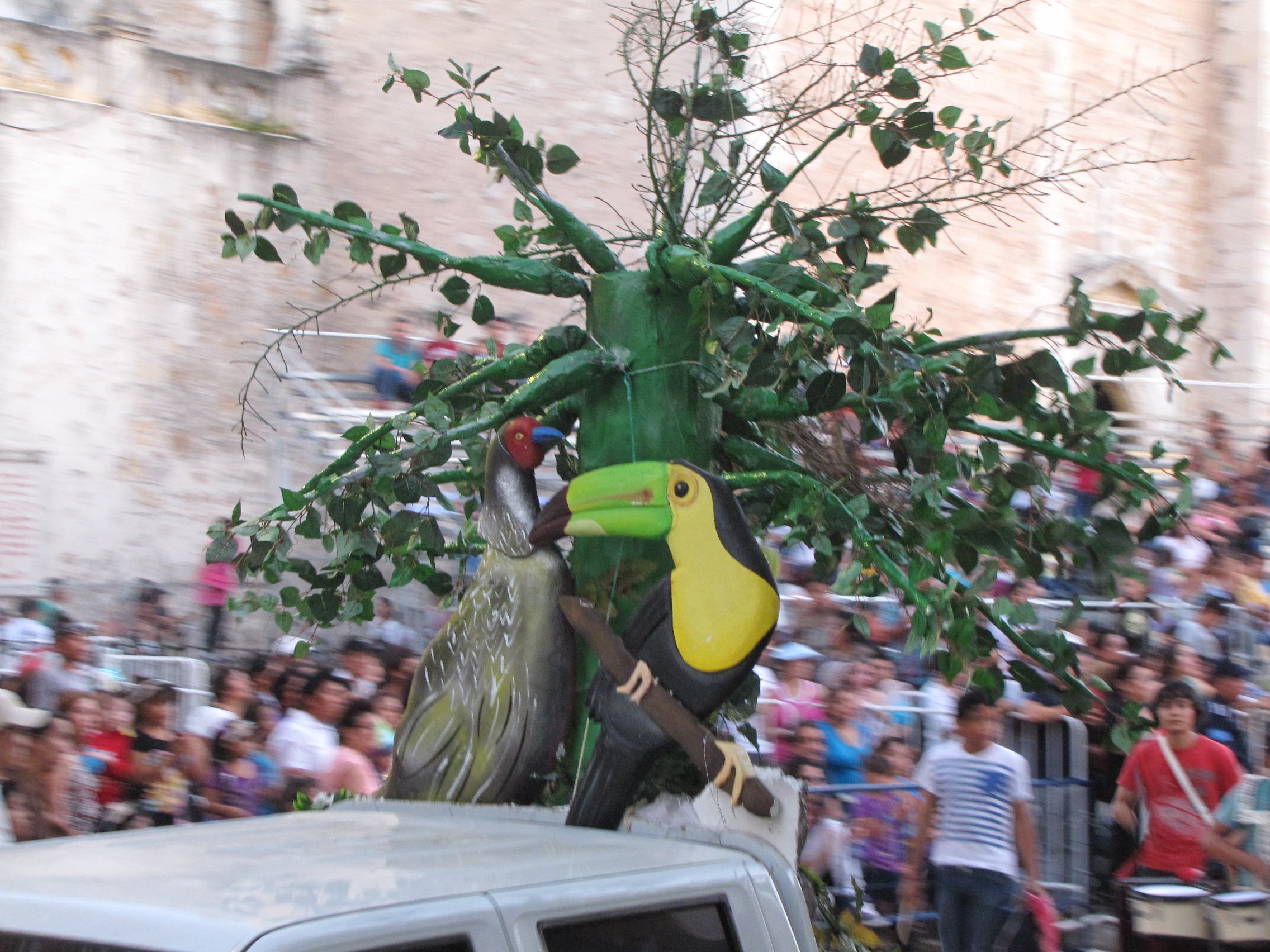



 In Merida this weekend a donkey and rider will proceed from Parque Sta.Lucia to the main cathedral, re-enacting the entrance of Jesus into Jerusalem. I’ve never seen this event before, so I have no idea what to expect. But I can imagine that truckloads of palm fronds will litter Calle 60. (The procession is scheduled for 8am Sunday morning, to arrive at the cathedral by 8:30 or so.)
As someone who has long lamented the waste of energy associated with harvesting Christmas trees, I have mixed feelings connected with the ecological costs of such cultural practices. But now I’ve been somewhat uplifted by an article in SLATE, here.
Sadly, I dropped my camera last week, and it no longer works. I’ve bought another on ebay, but it hasn’t arrived yet. So I won’t have pictures this year. I plan to put up some posts using file images related to the holiday.

Social networking is about to get scary and weird. Like the eyes of a fly, human society is about to merge all imaging signals together. Here’s a report from Creative Good. What would George Orwell say? BEWARE!

Above photo by Antonio Zugaldia, Wikimedia Commons
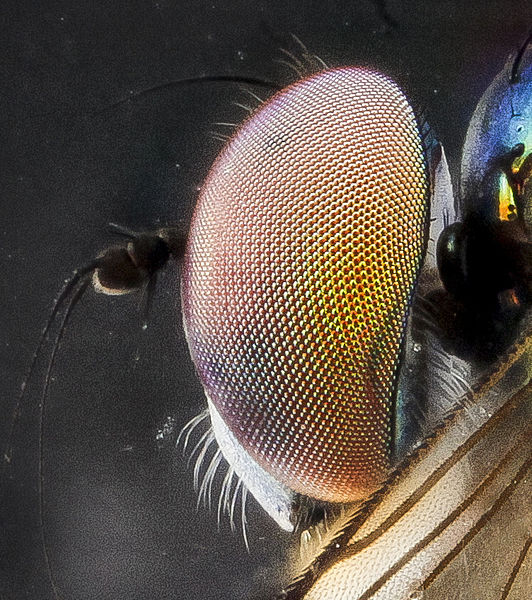
Compound eye records multiple images for reassembly by brain.
And HERE’s a link to an electron microscope zooming onto the lenses of a fly’s eye.


Ever fascinated with hats, I’m amused by this spiral galaxy known as The Sombrero (M104). And while I don’t for a minute think that this is what God looks like, I do wonder if S/He likes hats, too. For those interested in things philosophical and futuristic, there is this interview.